Artwork for Custom Glassware: Files, Print Areas and Proofs
Great custom glassware starts with the right artwork: a vector logo file, a design sized to the glass style you chose, and colors planned for clear glass. Get Custom Glassware checks every file, returns a free mockup within 24 hours and lets you revise as often as you like, so nothing is printed or etched until you approve it.
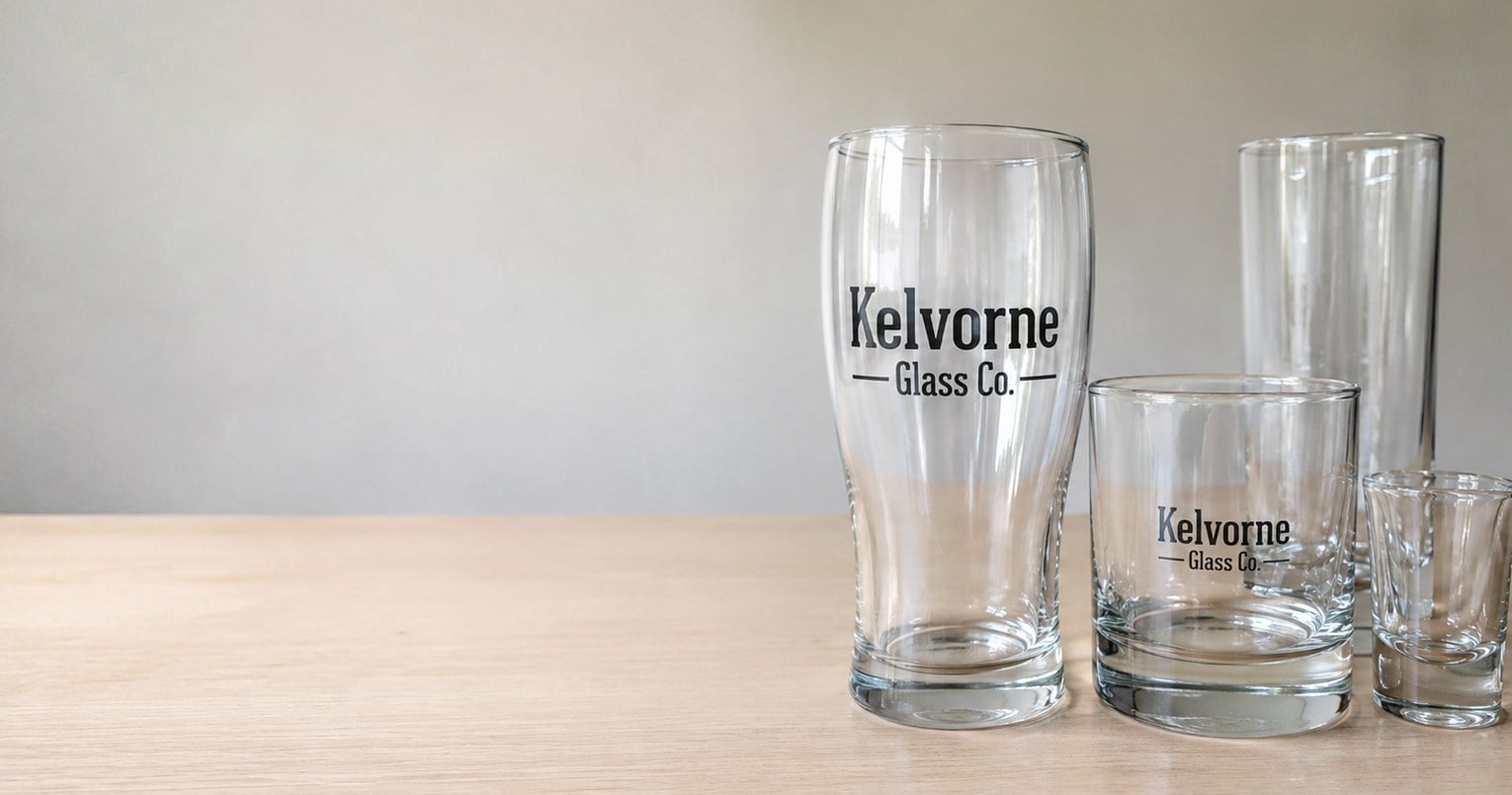
- Vector files (AI, EPS, SVG or vector PDF) give the cleanest edges on glass
- Free digital mockup within 24 hours, with unlimited free revisions
- Etching produces a single frosted tone; printing supports brand colors
- Minimum order is 12 pieces, and you pay nothing until you approve the design
- Standard turnaround is about 2 weeks after proof approval
What artwork files should you send for custom glassware?
The best file for custom glassware is a vector file: an AI, EPS, SVG or a PDF saved from a design program with the vector paths intact. Vector artwork is built from lines and curves rather than pixels, so it scales to any glass without blurring, and it is what screens, etching stencils and laser setups are made from. If your logo came from a designer or a print shop, ask them for the vector original.
Raster files such as JPG and PNG can still work when they are large and sharp, but small web images, screenshots and logos copied from social media usually show soft or jagged edges once they are enlarged onto a pint glass or a mason jar. Get Custom Glassware reviews every upload and will tell you on the mockup if a file needs cleaning up before it can be produced.
| File type | How it performs on glass | What to do |
|---|---|---|
| AI, EPS, SVG, vector PDF | Crisp edges at any size, ready for printing or etching | Send as is, with fonts outlined |
| Large, high-resolution PNG | Usually workable for simple logos | Send it and let the art team confirm on the mockup |
| Small JPG, screenshot or social image | Blurry or jagged edges once enlarged | Find the original file or ask for a redraw |
| Photo or gradient-heavy image | Hard to reproduce on clear glass | Simplify to solid shapes or a line version |
Where does the design go on each glass style?
The decoration area on custom glassware depends on the glass shape, and it is always smaller than the full height of the glass. Designs sit on the flattest, straightest part of the wall, clear of the drinking edge and the heavy base. Straight-walled glasses offer the most usable space; tapered and curved glasses offer less, because artwork has to follow the curve without stretching.
Get Custom Glassware places every design on a mockup of the exact style you order, so you see the real proportions before anything is produced. Use this as a guide when you design:
| Glass style | Typical decoration area | Design tip |
|---|---|---|
| Shot glasses | Small front panel | One bold mark or short text, nothing fine |
| Whiskey and rocks glasses | Front face of a short, wide wall | Compact, centered logos and monograms read best |
| Pint and beer glasses | Middle band of a tapered wall | Keep the design taller than it is wide |
| Highball and Collins glasses | Tall, straight wall | Vertical layouts and stacked text work well |
| Mason jars and handled mugs | Smooth panel between the embossing or opposite the handle | Check which side faces out for a right-handed drinker |
A front-and-back layout is often more effective than one oversized design. A logo on the front with a short line, date or web address on the back keeps both elements readable.
How do colors look on clear custom glassware?
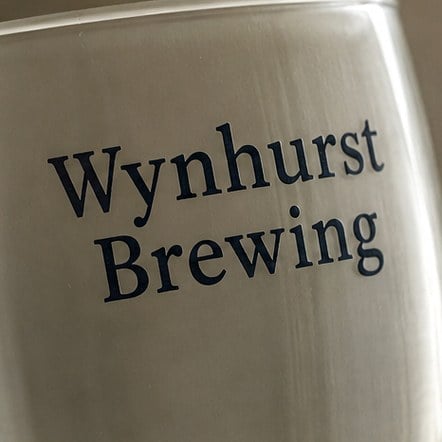
Colors on clear custom glassware always read against whatever is in the glass and whatever is behind it, so contrast matters more than on paper. Strong, solid colors and white hold up best. Pale tints, thin pastel lines and colors close to the drink, such as amber on a beer glass, tend to disappear once the glass is full.
Etched and sandblasted glassware produces a single frosted tone, so the design is defined by shape rather than color. That makes etching a strong fit for monograms, crests and line logos, and a weak fit for logos that rely on two shades to separate elements. If your logo uses a colored background box, the box usually needs to be removed or turned into an outline, because a solid filled panel hides the drink and looks heavy on glass.
- Printed glassware: plan for solid spot colors and send your brand color references so the art team can match them as closely as the glass allows.
- Etched glassware: supply a one-color version of your logo, ideally the version you use for embossing or engraving.
- White ink: reads well on clear glass and over most drinks, and works as a safe second color.
How should text and fine detail be sized on glass?
Text and fine detail on custom glassware should be simpler and bolder than on a business card or website, because glass is curved, reflective and viewed from across a table. Thin script fonts, hairline rules and tiny taglines are the elements most likely to fill in during printing or lose definition in a frosted etch.
Choose the shortest version of your message: a logo plus one line usually beats a logo plus a full sentence. Keep letters at a comfortable reading weight, give them room to breathe from the edges of the design, and avoid placing small text where the glass starts to curve toward the base. If a word must be small, use a clean sans-serif font rather than a script.
Get Custom Glassware flags detail that looks too fine for the chosen glass on your mockup and suggests a simplified version, so you can decide before production rather than discovering it on the finished order.
How does the mockup and proof process work?
The mockup is the step where custom glassware artwork becomes a decision you can see. Get Custom Glassware turns your file into a digital mockup on the exact glass style within 24 hours, and you can request changes as many times as you need at no cost. Production starts only after you approve, and you pay nothing until then.
- Request a quote with your glass style, quantity, decoration method and in-hand date, and upload your logo.
- Receive the mockup within 24 hours, showing placement, colors and the design on the real glass shape.
- Review and revise anything from spelling to placement, with unlimited free revisions.
- Approve the proof once every detail is right; that approved file is what goes to production.
- Receive your glassware in about 2 weeks on standard turnaround, or sooner with express shipping.
Read the mockup as the final product, not a sketch. Check every word, every date and every color reference, and ask a second person to proofread names and numbers in the design before you approve.
What artwork mistakes cause problems on a first glassware order?
Most artwork problems on a first custom glassware order come from files built for screens or paper rather than for glass. The good news is that each one is easy to catch at the mockup stage when you know what to look for.
- Sending a low-resolution logo: a small image pulled from a website looks fine on a phone and soft on a glass.
- Keeping a background box: white or colored rectangles behind a logo print as a solid patch on clear glass.
- Leaving fonts live: if the art team does not have your font, the design can shift; outline or embed fonts before you send.
- Designing one layout for every style: a wide horizontal logo that suits a rocks glass can feel cramped on a tall, tapered pint.
- Expecting gradients and photos on etched glass: etching produces one frosted tone, so shading needs to become solid shapes.
- Approving without a second proofreader: a misspelled name or wrong date is reproduced on every piece.
None of these mistakes costs anything to fix before approval. That is why Get Custom Glassware sends a mockup first and waits for your sign-off.
What should you have ready before you request a quote?
A complete artwork request gets you an accurate custom glassware quote and a useful first mockup. Gather these items before you fill in the form, and the art team can work from your first message instead of asking follow-up questions.
- Your logo in vector format, plus a one-color version if you are considering etching.
- The glass style or styles you want, from shot glasses to highballs.
- Your preferred decoration method, or a note asking for a recommendation.
- Brand color references and any wording, dates or web address you want on the glass.
- Quantity per design, starting from 12 pieces.
- The date you need the glassware in hand.
If you do not have every item, send what you have. Get Custom Glassware will tell you what is missing on the mockup and can suggest how to adapt the artwork you already own.
Frequently asked questions
What file format is best for custom glassware artwork?
Vector files are the best format for custom glassware artwork: AI, EPS, SVG or a PDF exported with its vector paths intact. Vector artwork scales cleanly to any glass size and is what printing screens and etching stencils are made from. Get Custom Glassware accepts other formats too and confirms on the free mockup whether the file is ready for production.
Can I send a JPG or a screenshot of my logo for glassware printing?
A JPG or screenshot can be used for custom glassware only when it is large, sharp and simple. Small web images usually look blurry or jagged once enlarged onto a glass wall. Send the best version you have, and the mockup will show whether the file holds up or whether you should locate the original vector file from your designer.
Do I need to outline fonts before sending glassware artwork?
Outlining fonts is strongly recommended for custom glassware artwork, because the art team may not have the typeface you used. Converting text to outlines, or embedding fonts in a PDF, keeps letter shapes and spacing exactly as you designed them. Keep a separate editable copy for yourself in case you want to change wording after seeing the mockup.
Can my logo be redrawn if I only have a low-quality version?
Logo cleanup is often possible for custom glassware orders when the only file available is blurry or small. Get Custom Glassware reviews every upload and will point out on the mockup if the artwork needs to be rebuilt or simplified. Simple marks and text logos are the easiest to rebuild; detailed illustrations may need your designer's original file.
Can a design wrap all the way around a custom glass?
Wraparound designs on custom glassware depend on the glass shape and decoration method. Straight-walled styles such as highballs handle wider designs better than tapered pint glasses or curved rocks glasses. Get Custom Glassware will show the possible layout on your mockup, and a front-and-back design is often a cleaner alternative to one continuous band around the glass.
Can I put a different design on the front and back of each glass?
Front-and-back layouts are a popular choice for custom glassware: a logo on one side and a tagline, date or web address on the other. Splitting elements this way keeps each one large and readable instead of squeezing everything onto one face. Get Custom Glassware places both sides on the mockup so you can judge how the glass looks from every angle.
Does white ink show up well on clear glassware?
White ink is one of the most reliable colors on clear glassware because it stands out against water, beer, cocktails and most backgrounds. Many brands use white as the main color or as a second color behind a darker logo. Get Custom Glassware can show a white version on your mockup so you can compare it with your full-color artwork.
Can I use a photograph as artwork on custom glassware?
Photographs rarely translate well to custom glassware, because glass is clear and curved and fine tonal shading is lost on it. Bold line art, silhouettes or a simplified illustration of the photo usually look far better. Get Custom Glassware can mock up a simplified version so you can see the difference before choosing which design goes into production.
What should I check on my glassware mockup before approving it?
A custom glassware mockup should be checked for spelling, dates, names, logo version, colors, placement and the glass style itself. Read every word aloud and ask a second person to proofread. Confirm the design sits where you want it and suits the glass shape. Get Custom Glassware produces exactly what you approve, so the mockup is your final checkpoint.
Which version of my logo works best for etched glassware?
Etched glassware works best with a one-color logo built from solid shapes and clear outlines, such as the version used for embossing, engraving or a rubber stamp. Etching creates a single frosted tone, so gradients, shadows and two-tone effects disappear. Supply that one-color version with your quote request and the art team can mock it up directly.
Can I see my design on more than one glass style before ordering?
Comparing glass styles on a mockup is a smart step before ordering custom glassware, because the same logo can feel very different on a shot glass, a rocks glass or a tall highball. Get Custom Glassware can mock up the design on more than one style so you can choose the shape that frames your artwork best.
Will fine lines and small taglines hold up on custom glassware?
Fine lines and small taglines are the details most likely to blur or fill in on custom glassware, especially on curved walls and in etched finishes. Bolder strokes, shorter wording and clean sans-serif fonts reproduce more reliably. Get Custom Glassware flags detail that looks too delicate on your mockup and suggests a simplified version before you approve production.
Get a free mockup for your glassware
Send your logo or idea and the quantity you have in mind. Get Custom Glassware returns a free mockup within 24 hours, you approve the design before anything is produced, and standard turnaround is about two weeks with faster options available. Get a custom quote.